ChainMill
ChainMill

Steel Intelligence Briefing

The Week That Was — w/c 6 Oct 2025

Mark Fluke
From Mark Fluke
Head of Trade & Customs

The EU's plan to halve steel import quotas and impose 50% duties above cap has redrawn the global steel map overnight.
For the UK, it isn't just a question of price or volume — it's about origin.
As the EU aligns more closely with U.S.-style "melt and pour" rules, where access depends on where steel is smelted rather than where it's traded, the UK faces a complex choice: how to protect domestic production without isolating the wider ecosystem of processors, re-rollers, and distributors that make up its steel industry.

News in Brief (TL;DR)

  • EU proposal: quotas cut nearly in half, 50% tariffs above cap — the toughest trade defence since 2018.
  • UK response: government seeks clarification from Brussels amid fears that surplus Asian steel will flood the UK.
  • Industry reaction: UK Steel calls for mirror measures to prevent the UK becoming a dumping ground.
  • EU equities rise, autos push back: steelmakers rally; carmakers and fabricators warn of higher costs.
  • Neighbour reactions: Switzerland, China, and the UK all request exemptions or clarifications.
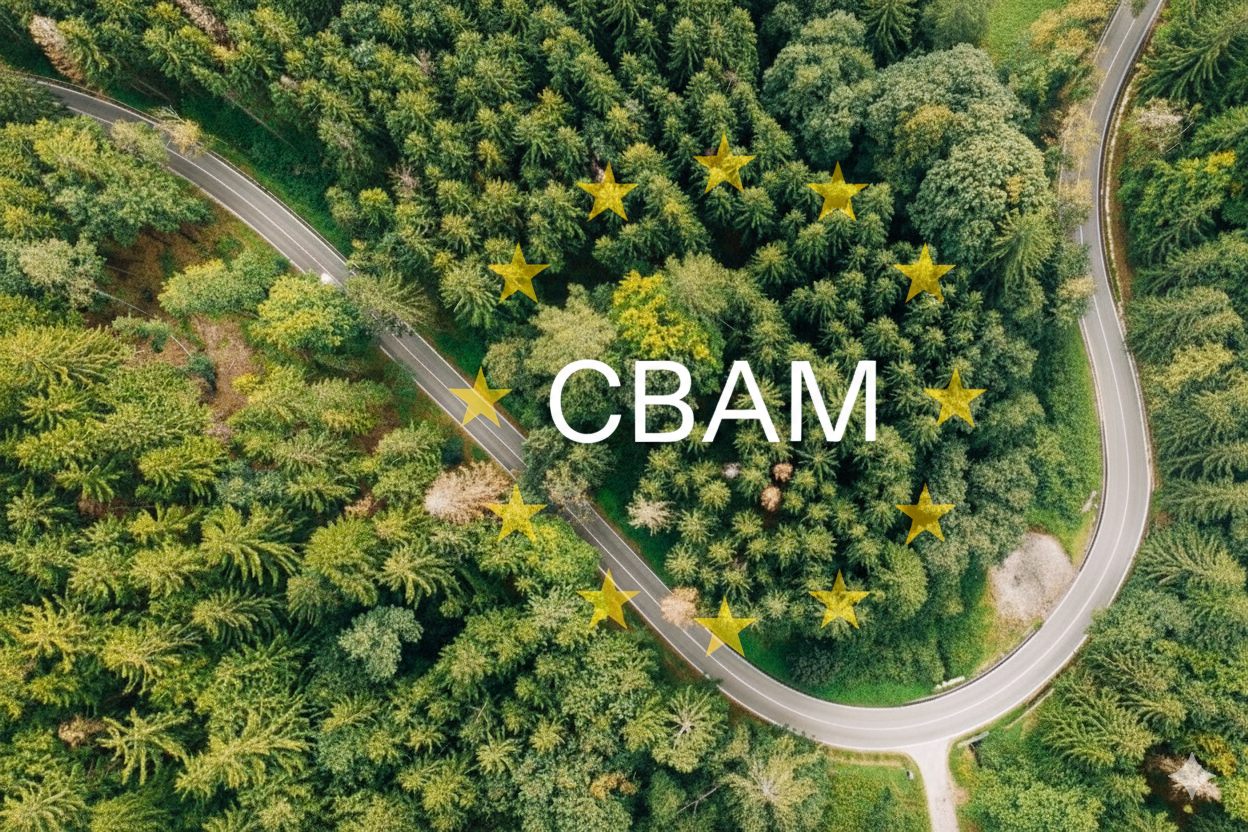
  • CBAM alignment talks: signs of a UK–EU deal to avoid double carbon border charges.
  • Thyssenkrupp–EP Group JV scrapped, paving way for renewed Jindal focus.
  • Carney–Trump meeting hints at targeted U.S. tariff relief — not removal.

Trade & Tariffs

  • The EU's proposal to halve quotas and impose 50% tariffs above cap cements trade management as a permanent structure, not a temporary measure.
  • The UK faces a flood-risk scenario: if Asian steel blocked from the EU diverts to Britain, domestic mills could be undercut unless London mirrors Brussels' measures or deploys targeted safeguards.
  • Switzerland, China, and the UK are already seeking clarification on the new regime's scope — a clear sign that global supply chains are being re-engineered.
  • Origin rules are taking centre stage. The EU's convergence with U.S. "melt and pour" logic — where access is determined by the site of smelting — means industrial sovereignty now shapes trade access. Countries with strong domestic melt capacity will be insulated; those dependent on imported semi-finished product will not.

Market & Production

  • Expect front-loading into existing EU quota windows before implementation.
  • If the UK mirrors the EU's regime, short-term scarcity will tighten supply and stabilise margins for UK producers.
  • If it doesn't, diverted imports could flood the UK market, undercutting prices and utilisation just as domestic producers are regaining momentum.

Energy & Costs

  • Energy prices have steadied, but decarbonisation remains a drag on cost competitiveness.
  • UK-EU CBAM talks show tentative progress toward avoiding dual carbon taxation — critical for export competitiveness.
  • Without an agreement, UK steel exported to the EU could face both CBAM charges and domestic carbon costs.

M&A / Investment

  • Thyssenkrupp's break with EP Group reopens the door for Jindal, with any deal likely contingent on EU policy clarity and decarbonisation incentives.
  • Investor sentiment is turning cautious: higher protection supports pricing power, but uncertainty around energy and carbon regimes clouds long-term returns.

Policy & Security

  • UK Steel and trade unions are pressing government to mirror EU safeguards and prevent dumping.
  • The Buy British agenda gains renewed attention as policymakers seek to anchor domestic demand through procurement while broader negotiations continue.

Articles that may be of interest

EU Tariff Hike

EU Steel Tariff Hike Puts UK Mills on the Defensive

Brussels plans to slash steel import quotas and layer 50% duties on excess tonnes, forcing the UK to negotiate fresh safeguards for its biggest export market.
Read more →
UK CBAM

The UK CBAM: What businesses need to know to get ready

The UK government's green light for a domestic Carbon Border Adjustment Mechanism (CBAM) is a major step towards net zero by 2050. But who will it affect and how?
Read more →

Our Analysis

Trade tools are no longer temporary.

The EU's decision to halve quotas and double above-cap tariffs marks a fundamental shift from market liberalism to managed protection. Tariffs and quotas are no longer crisis tools — they're the new architecture. Agility around quota use, supplier mix, and origin verification will now determine competitiveness.

Origin has become leverage.

"Melt and pour" and cumulation rules are no longer obscure customs details — they're shaping the future of steel trade. By aligning more closely with the U.S., the EU is redefining access based on where steel is produced, not simply where it is traded or processed.

For the UK, this brings both risk and opportunity. The detail of any negotiation will be critical. London cannot afford to focus solely on protecting GB melt capacity while neglecting the wider network of processors, re-rollers, and distributors that sustain the UK steel economy. Steel safeguarding currently sits outside the Trade and Cooperation Agreement, and under present rules, EU-origin material imported into Great Britain can still be re-exported to the EU — including Ireland — under the EU's open safeguard.

That flexibility must remain, even if further processing in Britain converts the material into GB-origin steel. Any move to restrict that pathway would penalise downstream manufacturers reliant on European feedstock, distort competition inside the UK, and risk cutting Northern Ireland and Ireland-based customers out of long-established supply chains.

In short, the UK must negotiate from inclusion, not isolation. The goal should be reciprocal recognition within the EU's evolving "melt and pour" regime — securing a system that supports all UK steel players, not just those who melt but those who manufacture, process, and distribute.

Negotiation is now strategy.

The government must use this moment to push for expanded cumulation or sector-specific origin recognition with Brussels. Failure to do so would leave the UK exposed to two extremes: imports flooding in under open safeguards, and exports locked out by origin rules.

Procurement can cushion, but not cure.

Reeves' proposed "Buy British" framework could offer short-term stability for public projects, but procurement alone won't offset structural vulnerabilities. Policy coherence — combining local sourcing with international negotiation — is essential.

CBAM alignment remains critical.

Avoiding double carbon taxation through a UK-EU accommodation would keep British steel competitive and incentivise low-carbon investment. This technical policy work may lack headlines, but it's the foundation of long-term viability.

Governments are back on the field.

From Brussels' protectionism to Canada's Algoma bailout, state action is the stabiliser of last resort. The UK must decide whether to join that game — or continue playing defence while others take the initiative.

Forward Signals (Next 4-8 Weeks)

  1. EU steel quota proposal — final legal text and implementation timeline
  2. UK-EU steel trade negotiations — quota carve-outs and origin recognition
  3. U.S. steel import monitoring — Commerce Department data on redirected flows
  4. Canadian steel support — Algoma Steel restructuring details
  5. German steel consolidation — Thyssenkrupp alternative suitors
  6. Jindal-Thyssenkrupp — deal structure and government involvement

Closing Note

If you'd like to explore how these developments affect your supply chain or market strategy, let's connect.

Mark LinkedIn

ChainMill
Home Insights About Contact

© *|CURRENT_YEAR|* ChainMill · chainmill.io
info@chainmill.io

Sent by ChainMill · *|LIST_ADDRESS|*
You can unsubscribe or update your preferences at any time.